 admin
admin Monstera Borsigiana Care: Key Differences from Deliciosa You Must Know
If you’ve ever stood in a nursery, squinting at two seemingly identical Monsteras, wondering which one is the “right” one or why your “Deliciosa” isn’t developing those massive, split leaves you dreamed of, you’re not alone. I’ve been there. The confusion between Monstera Borsigiana and Monstera Deliciosa is one of the most common, frustrating pain points for houseplant enthusiasts. It leads to mismatched care expectations, disappointment in growth patterns, and sometimes, the loss of a plant we thought we understood. After years of collecting and a particularly enlightening side-by-side experiment with both varieties, I’ve untangled the mystery. Let me guide you through the essential care for Monstera Borsigiana and its critical differences from Deliciosa, so you can nurture your plant with confidence.
Understanding the Core Difference: It’s All in the Genetics

First, let’s clarify the often-debated terminology. For a long time, Monstera Borsigiana was considered a separate species. However, current botanical consensus, supported by institutions like the Royal Horticultural Society (RHS), now classifies it as a subspecies or variety of Monstera Deliciosa. Think of Deliciosa as the standard model and Borsigiana as a specific, naturally occurring variant. The key takeaway isn’t the label but the consistent, observable traits that affect how you care for it. The primary difference lies in growth habit and mature form.
Side-by-Side: My Two-Week Observation Journal
To move beyond theory, I placed a mature Monstera Borsigiana and a true Monstera Deliciosa in identical east-facing windows with the same soil mix and watering schedule. My goal was to observe subtle differences in behavior over a concentrated period.
- Week 1: Growth Node & Stem Structure. The most immediate visible difference was at the stem. The Borsigiana’s internodes (the spaces between leaves on the vine) were consistently longer, meaning the leaves grew farther apart. The Deliciosa’s internodes were compact. The Borsigiana stem was more slender and flexible, while the Deliciosa’s was sturdier and had a more pronounced, ruffled ridge near the leaf base (the geniculum). This structural difference is a definitive identifier.
- Week 2: Leaf Development & Climbing Instinct. A new leaf began to unfurl on the Borsigiana. It was smaller and grew faster than the Deliciosa’s emerging leaf. Crucially, the Borsigiana’s aerial roots were more aggressively seeking a support to climb, while the Deliciosa seemed initially focused on leaf expansion. This reinforced that Borsigiana is an avid, faster-climbing vine, whereas Deliciosa invests more energy in leaf size at a younger age.
This experiment cemented that treating them as identical often holds the Borsigiana back from its full potential.
Tailored Care Guide for Monstera Borsigiana
Given its vining nature, your care strategy for Borsigiana should slightly pivot.
Light: Bright and Indirect is Non-Negotiable Both varieties need light, but Borsigiana’s faster, leggier growth means insufficient light exacerbates stretching. It thrives in bright, indirect light. A spot near an east or west-facing window is ideal. In lower light, the internodes will stretch even longer, and fenestrations (leaf splits) will be minimal or absent. I learned this the hard way; my first Borsigiana in a north-facing room became a long, sparse vine with tiny, solid leaves. Moving it to a brighter location prompted tighter growth and the first splits within a new leaf cycle.
Watering: The Balance of a Vigorous Vine The principle “water when the top few inches of soil are dry” applies. However, because a healthy Borsigiana is often growing more actively, it may dry out its potting mix slightly faster than a Deliciosa of the same size, especially when climbing. Don’t just water on a schedule. I stick my finger into the soil weekly. The pitfall I encountered was overwatering a Borsigiana I assumed was thirsty due to its long vines. The result was yellowing lower leaves. The fix was simple: I returned to checking soil moisture diligently and ensured the pot had excellent drainage.
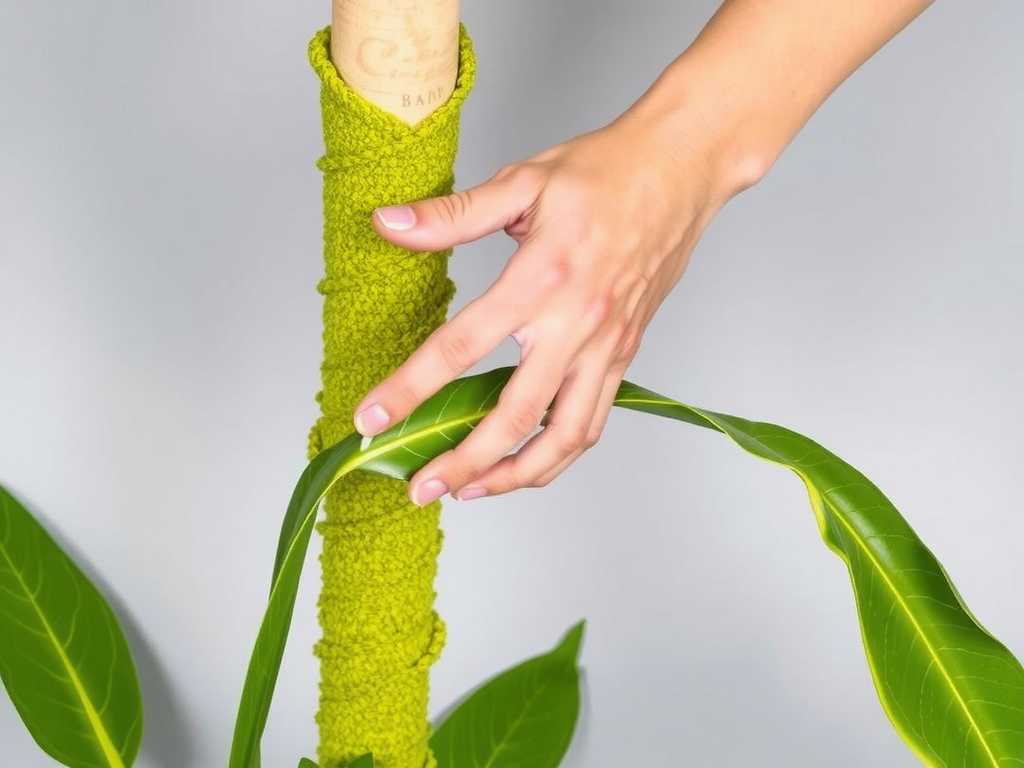
Soil and Support: The Foundation of Success This is where care diverges most significantly. Borsigiana is a natural climber. Without a support like a moss pole, coir pole, or trellis, it will trail or grow horizontally, often with smaller leaves. When its aerial roots can attach to a moist, stable support, it mimics its natural habitat, encouraging larger, more mature leaves with better fenestration over time.
I repotted my Borsigiana with a moss pole. The process:

- I used a well-draining aroid mix (orchid bark, perlite, peat, and charcoal).
- I positioned the pole at the pot’s center and gently tied the main stem to it, ensuring the aerial root tips made contact with the pole.
- I kept the pole consistently moist, which the plant responded to enthusiastically.
Within two weeks of this intervention, I observed new aerial roots actively gripping the pole, and the subsequent new leaf was noticeably larger and had one distinct split—a sign it was transitioning to a more mature form.
Fertilization: Fueling Vertical Growth During the growing season (spring and summer), I feed both plants with a balanced, diluted liquid fertilizer every 4-6 weeks. For the Borsigiana, I consider it essential fuel for its vertical ambition. Under-fertilizing a supported, climbing Borsigiana can lead to pale leaves and slow progress. The American Horticultural Society (AHS) emphasizes that vigorous tropical vines benefit from consistent, moderate feeding during active growth periods to support both foliage and root development.
Key Differences from Monstera Deliciosa at a Glance
- Growth Habit: Borsigiana is a faster, more aggressive climber with longer internodes. Deliciosa is more self-heading and bushy when young, with shorter internodes.
- Mature Leaf Size: A mature, supported Borsigiana leaf typically maxes out around 12-18 inches. A mature Deliciosa leaf can reach 3 feet or more in ideal conditions.
- Stem: Borsigiana stems are smoother and more slender. Deliciosa stems are stouter with a distinctive, wrinkled “ruffle” below the leaf joint.
- Fenestration Pattern: Both develop splits and holes, but Deliciosa tends to develop more dramatic, multi-row fenestrations and inner perforations (holes) at a younger age and smaller size.
Troubleshooting Common Borsigiana Issues
- Long, Leggy Vines with Small Leaves: This is almost always a combined issue of insufficient light and lack of support. Increase light exposure and provide a stable, moist moss pole.
- No Fenestrations: Immaturity, low light, or inadequate nutrients. Ensure bright indirect light, provide a support, and fertilize appropriately during growth seasons. Patience is key—solid leaves are normal on young plants.
- Aerial Roots Drying Out: In our dry home environments, aerial roots can become brittle. I guide mine onto the moss pole or into the soil. Some growers also use small tubes of water to hydrate them, which I’ve found effective.
Frequently Asked Questions
Is Monstera Borsigiana just a small Monstera Deliciosa? Not exactly. It’s a genetic variant with a distinct growth pattern. While its leaves are generally smaller, its vining habit is more pronounced. A young Deliciosa might be small, but its structure and growth form differ.
Can my Borsigiana ever get leaves as big as a Deliciosa? With exceptional care, perfect conditions, and age, a Borsigiana can produce impressively large, fenestrated leaves, but they will typically not reach the colossal size of a mature, ground-grown Deliciosa in a greenhouse. Its beauty lies in its elegant, climbing form.
Which one is easier to care for? For many indoor growers, Borsigiana can be slightly more forgiving due to its faster adaptation and vining nature, which is easier to manage with stakes. Deliciosa requires more space as it matures. The “easier” plant truly depends on your space and whether you prefer a towering bush or a manageable climber.
Understanding whether you have a Monstera Borsigiana or a Deliciosa transforms your care from a guessing game into a targeted strategy. By recognizing its innate desire to climb and providing the right structure, light, and moisture, you unlock its potential to become a stunning, mature specimen. The joy comes from working with its nature, not against it. Give your Borsigiana the support it craves, and you’ll be rewarded with a vigorous, beautiful plant that clearly shows the unique charm of this particular Monstera variety.
发表评论