 admin
admin My Monstera was starting to look more like a weary traveler than a majestic indoor jungle centerpiece. Its once-upright stems were now arching dramatically over the pot’s edge, and the magnificent, fenestrated leaves seemed to be straining under their own weight. I knew it was time to intervene. If you’re reading this, you’ve likely faced the same dilemma: how to stake a tall Monstera effectively without damaging its precious aerial roots or compromising its natural, wild beauty. This guide isn’t just theory; it’s the detailed account of my own two-week journey to properly support my towering plant, complete with the mistakes I made and the solutions I found.
Why Your Tall Monstera Desperately Needs Support
In its natural rainforest habitat, a Monstera deliciosa is a climbing hemiepiphyte. It uses its aerial roots to latch onto tree trunks, climbing upwards towards the canopy light. As the Royal Horticultural Society (RHS) notes, providing a support like a moss pole or stake mimics this natural behavior, encouraging larger leaf development and healthier, more stable growth. Without support, the plant becomes top-heavy, stems can snap under stress, and growth may become uneven and leggy as it searches for something to cling to. The core issue isn’t just aesthetics; it’s about plant health and fulfilling its innate growth pattern.
Gathering the Right Tools: More Than Just a Stick
My first attempt failed because I used the wrong materials. I grabbed a thin bamboo stake, some rough twine, and got to work. Within days, I noticed abrasions on the stem. Here’s the toolkit I assembled for the successful, gentle support system:
- The Support Stake: I chose a coir or moss-covered pole. These are ideal because they retain moisture, providing a perfect medium for the Monstera’s aerial roots to attach and absorb water and nutrients. A wooden plank or a sturdy, thick bamboo stake can also work.
- Soft Ties: This was my game-changer. I switched from twine to velcro plant ties, soft garden tape, or even strips of old nylon stockings. They are flexible, gentle on stems, and easily adjustable.
- A Deep Pot: Ensuring your pot is appropriately sized and heavy enough to counterbalance the height of the stake is crucial for stability.
- Pruning Shears: For any light trimming needed during the process.
- Gloves: To protect your hands from any irritants in the potting mix or on the plant.
My Step-by-Step Process: Staking Without Stress
This is the exact process I followed, which transformed my Monstera from slouching to spectacular.
Step 1: The Gentle Preparation I watered my Monstera thoroughly a day before staking. A well-hydrated plant is more flexible and less prone to shock. I also took this time to gently inspect the stems and identify the main, thickest vines that needed the most support.
Step 2: Positioning the Stake Strategically Instead of forcing the stake right next to the main stem, I carefully inserted it into the pot’s edge, angling it slightly towards the center for better leverage. The goal is to place it close to the plant’s backside—the side facing the direction of most natural lean. I pushed it deep into the soil until it hit the bottom of the pot, ensuring a solid foundation. According to the American Horticultural Society’s (AHA) guidelines on staking, a secure, deep anchor is the first step to preventing root disturbance later.
Step 3: The Art of Tying and Training This requires patience. I never pulled the stems perfectly upright. Instead, I supported them in their natural growth direction. Starting from the base, I used a soft velcro tie to loosely attach the thickest stem to the stake in a figure-eight pattern. The tie was snug but not tight—I could easily slip a finger between the tie and the stem. I worked my way up, adding ties at intervals of 6-8 inches. For younger, more flexible stems, I gently encouraged them towards the pole.
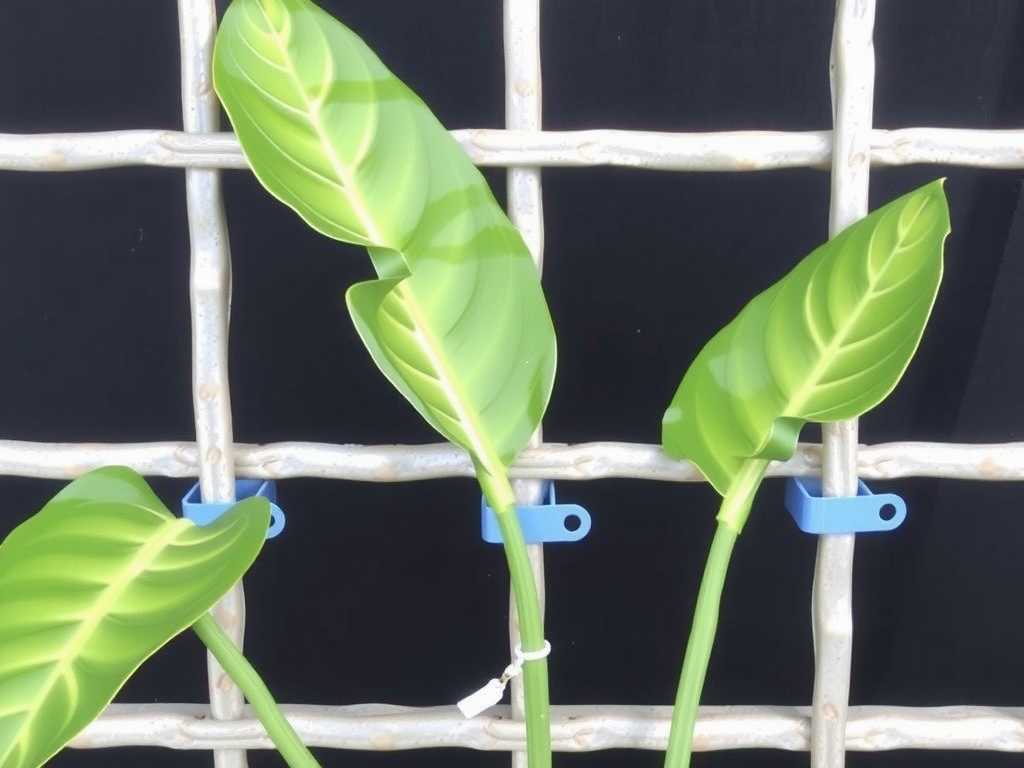
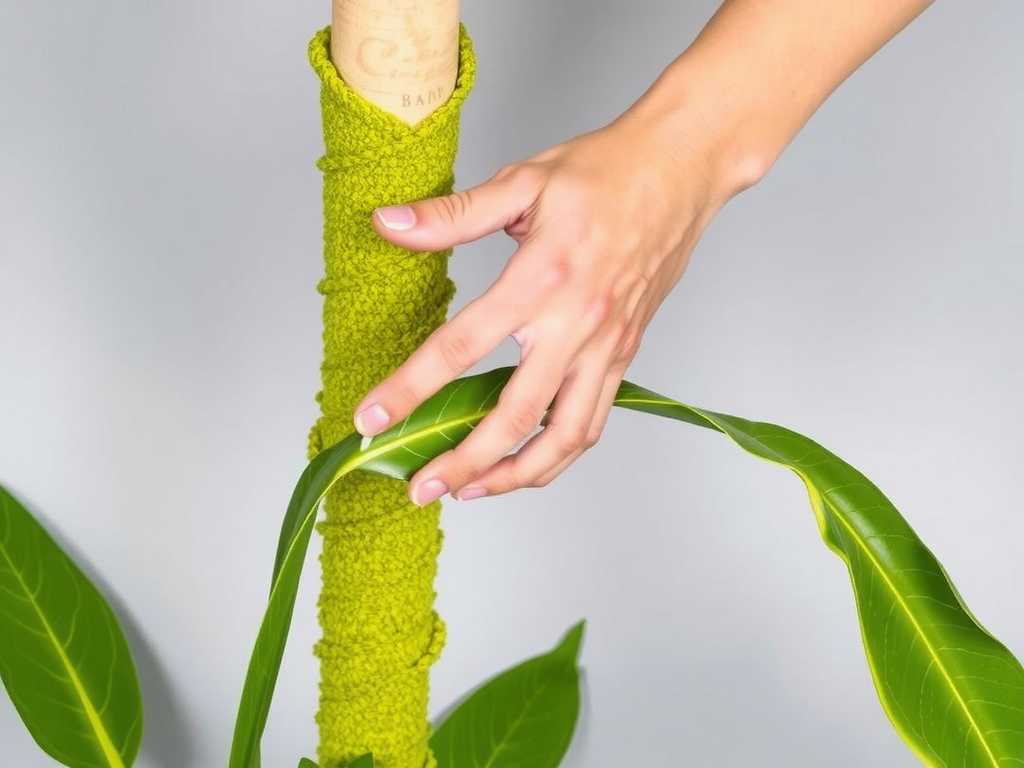
Step 4: Encouraging Aerial Root Attachment This is where a moss pole shines. I used a spray bottle to regularly moisten the pole, creating a humid, inviting environment for the aerial roots. I gently directed some of the longer aerial roots towards the damp moss, but didn’t force them. They need to find their way naturally.
The Two-Week Observation: What Actually Happened
The real test began after the initial setup.
- Days 1-3: The plant looked a little shocked, with some leaves oriented differently. I maintained normal light and watering routines.
- Days 4-7: I noticed the stems were no longer sagging further. The existing ties were holding well. A few aerial roots near the moist moss pole seemed to be extending towards it.
- Days 8-14: This was the most rewarding period. The plant had clearly stabilized. New growth—a fresh, tightly furled leaf—emerged from the top of the main supported vine. It was perfectly vertical, growing straight up along the stake instead of outwards. The older leaves stopped their downward droop and appeared more perky. Most importantly, there were no signs of stem constriction or damage from the soft ties.
The Pitfalls I Encountered (And How You Can Avoid Them)
My journey wasn’t flawless. Here’s where I stumbled:
- The Mistake of Overtightening: My initial twine was too tight. I saw a slight indentation on one stem within 48 hours.
- The Fix: I immediately removed all twine and replaced it with loose-looped velcro ties. The indentation disappeared after a few days as the stem continued to grow.
- Ignoring the Moisture Factor: My first bamboo stake was dry. The aerial roots showed no interest.
- The Fix: Switching to a pre-soaked moss pole and misting it regularly created a visible difference. The roots actively sought it out.
- Staking a Bone-Dry Plant: I initially tried staking when the soil was very dry. The root ball shifted slightly, causing minor stress.
- The Fix: Always water a day in advance. The moist soil holds the root structure firmly, allowing for safer stake insertion.
Maintaining Your Staked Monstera for Long-Term Health
Staking isn’t a one-time fix. As your Monstera grows, you’ll need to extend the pole by adding a new section on top and tying the growing vine to it. Continue to moisten the moss pole as part of your watering routine. Check the ties every month or so, loosening them if they become too tight as the stem thickens—a process known as secondary growth.
How often should I water a Monstera on a moss pole? Water the soil as you normally would, based on moisture level, not a schedule. The key difference is to regularly mist or pour water down the moss pole itself to keep it moist and attractive to aerial roots. This mimics the humid, nutrient-rich tree bark it would climb in the wild.
Can I use a regular wooden stake instead of a moss pole? Yes, you can. A sturdy wooden stake or even a plank provides excellent physical support. However, it won’t offer the same horticultural benefits. Aerial roots may not attach as readily to dry wood, and they won’t be able to absorb moisture and nutrients from it. A moss or coir pole supports the plant’s natural physiology more completely.
My Monstera stems are very rigid and bent. Can I still stake it? For mature, heavily lignified (woody) stems that are set in a bent shape, do not try to force them straight. You risk cracking them. Secure the stake and tie the stem where it is, providing support from that point upwards. The new growth will train vertically along the stake, creating a more balanced look over time.
Providing the right support for a tall Monstera is a simple act that yields profound results. It’s about working with the plant’s nature, not against it. By choosing a supportive stake that meets its needs, using gentle ties, and patiently guiding its growth, you’re not just preventing a collapse—you’re actively participating in its journey towards becoming the stunning, architectural specimen it’s meant to be. The difference in posture, leaf size, and overall vitality in just a couple of weeks was all the proof I needed. Your Monstera is ready to climb; it just needs you to show it the way.
发表评论