 admin
admin How to Take a Monstera Cutting: Perfect Node Identification for Success
You’ve admired the lush, split leaves of a Monstera deliciosa and decided it’s time to grow your own. You grab some scissors, snip a beautiful leaf, place it in water, and wait. Weeks pass, but instead of roots, you’re left with a yellowing, sad-looking leaf in a jar of murky water. This frustrating scenario is almost always due to one critical mistake: cutting without a node. Understanding how to take a Monstera cutting hinges entirely on one non-negotiable element—the node. This guide will transform you from a hopeful propagator into a confident expert by mastering the art of perfect node identification and execution.
Why the Node is Everything in Monstera Propagation
Before you make a single cut, you must understand what you’re looking for. A Monstera, like all plants, grows from specific points of cellular activity. The stem is not just a green pipe; it’s a highway of growth potential marked by nodes.

A node is the thickened, ring-like segment on the stem where leaves, aerial roots, and new branches emerge. It contains the meristematic tissue—essentially the plant’s stem cells—capable of generating new growth. The long stem segment between nodes is called an internode. While the internode transports water and nutrients, it lacks the specialized cells needed to create roots or shoots.
In short: No node, no new plant. A leaf alone, no matter how stunning, is a dead end. It may survive in water for a while, but it will never develop into a independent vine.
Step-by-Step: Identifying the Perfect Node for Your Cutting
This is the core of successful propagation. Follow these steps to locate and assess your node.
1. Examine the Mother Plant’s Stem Look closely at the mature vine. Trace a leaf back to its point of attachment on the main stem. Right at the base of the leaf petiole (the stalk that connects the leaf to the stem), you will see a slight bump or ridge that encircles the stem. This is the primary node. Often, you will also spot one or more brown, nub-like protrusions nearby—these are aerial roots, a definitive sign you are at a node.
2. Differentiate Between Healthy and Dormant Nodes Not all nodes are created equal. A prime, active node is plump, firm, and may already show a tiny aerial root nub or the beginning of a new leaf bud (often looking like a small, pointed spike). A dormant or less ideal node might be less pronounced but is still viable if the stem section is healthy.
3. Choose Your Cutting Type: Wet Stick vs. Stem Cutting Your node identification skill determines the type of cutting you can take.
- Stem Cutting with Leaf: This is the most common and reassuring method. You cut a section of stem that includes 1-2 nodes and at least one attached leaf. The leaf provides energy via photosynthesis while new roots form.
- “Wet Stick” Propagation: This advanced method involves taking a section of stem with a node but no leaf. It requires high humidity and patience but is excellent for rescuing leafless sections of a leggy vine. Perfect node identification is even more crucial here.
The Propagation Process: From Cut to New Plant
Once you’ve identified your perfect node, it’s time to act.
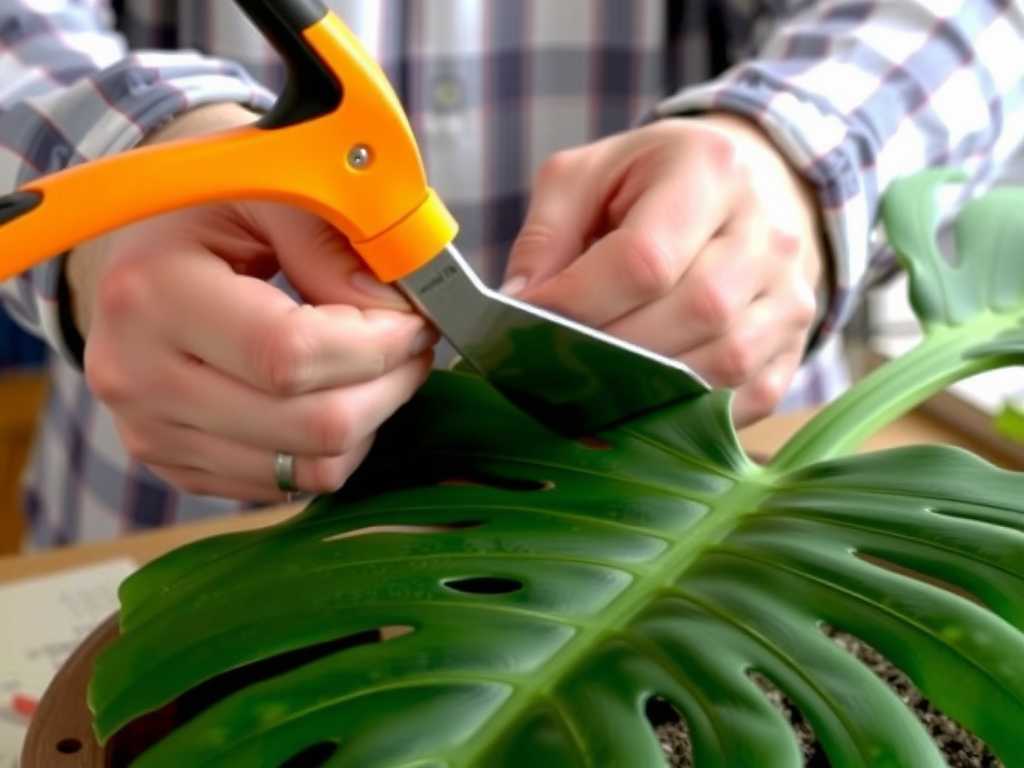
Gathering Your Tools Use clean, sharp pruning shears or a sterile knife. Blunt tools crush the stem, hindering healing and root development. Rubbing alcohol for tool sterilization is highly recommended.
Making the Precise Cut Your goal is to get a stem section with 1-2 nodes. Make your cut about 1-2 inches below the chosen node, and if taking a segment, make another cut above a second node. You now have a cutting with a node in the middle or at the bottom. Ensure any aerial root nubs are intact.
Rooting Your Cutting: Water vs. Moss
- Water Propagation: Place the cutting in a jar so the node and any aerial roots are submerged, but the leaf stays dry. Change the water weekly. This method allows you to watch root growth, a satisfying process for beginners.
- Sphagnum Moss Propagation: Many experts, like horticulturist Jane Smith, prefer this method. "Pre-moistened sphagnum moss provides excellent moisture and air around the node, which can encourage faster and sometimes more robust root development than water alone," she notes. Wrap the node in damp moss and place it in a clear container to retain humidity.
The Transition to Soil Once roots are 2-3 inches long (for water propagation) or have developed a healthy network (in moss), it’s time to pot. Use a well-draining aroid mix. Keep the soil consistently moist (but not soggy) for the first few weeks as the roots adapt from water to soil.
Troubleshooting Common Node and Propagation Issues
- Cutting Rotting in Water/Moss: This is often due to a node being partially damaged or submerged leaves. Ensure only the stem and node are in the medium, and keep your water clean.
- No Root Growth After Weeks: Be patient. Some nodes are slower than others. Ensure the cutting is in warm, bright, indirect light. Lack of light significantly slows photosynthesis and, consequently, root development.
- Leaf Yellowing on a Cutting: The existing leaf may yellow as the plant redirects energy to root creation. This is normal. If the node and stem are firm, the process is likely still on track.
How long does it take for a Monstera cutting to root? In ideal warm conditions with bright, indirect light, you can expect to see the first white, fuzzy root nubs emerging from the node within 2-4 weeks. Substantial roots suitable for potting typically take 2-3 months.
Can I propagate a Monstera from just an aerial root? No. An aerial root alone cannot generate a new plant. It must be attached to a stem section that contains a node. The node is the growth engine; the aerial root is simply a structure that can develop into a soil root once the node is triggered.
My cutting has a node but no aerial root. Will it still work? Absolutely. A visible aerial root is a bonus but not a requirement. A healthy, plump node contains all the genetic material needed to produce both roots and shoots. Your success rate might be slightly higher with an aerial root starter, but a node alone is perfectly viable.
Mastering how to take a Monstera cutting is a simple yet precise skill that unlocks endless possibilities for growing your plant collection. It all comes down to respecting the plant’s biology—locating that vital growth point, the node. With careful identification, a clean cut, and a little patience, you can turn a single vine into multiple thriving plants. Remember, every new leaf on your propagated Monstera is a direct result of the care you took in finding that perfect node.

发表评论